
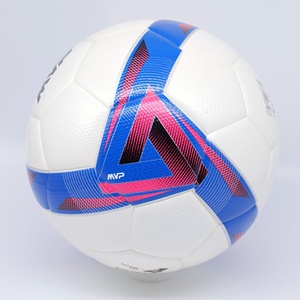
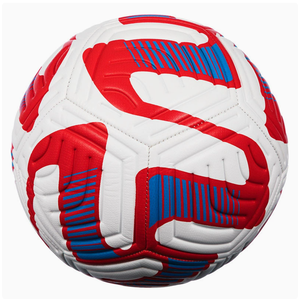
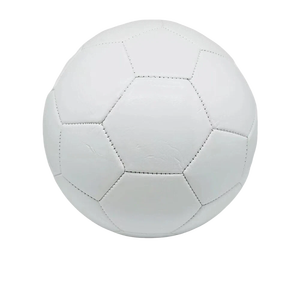
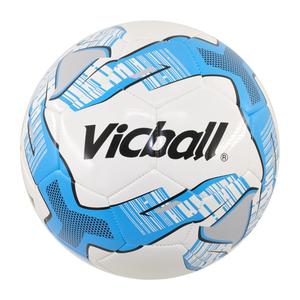
Global Futsal Balls Sourcing & Manufacturing Whitepaper
Futsal has evolved from a niche indoor training discipline into one of the fastest-growing professional sports worldwide under FIFA and AMF oversight. Unlike traditional field soccer balls, a professional futsal ball demands precise mechanical engineering to perform on hard indoor surfaces such as polished hardwood, polypropylene court tiles, and synthetic turf. As a leading China futsal balls supplier and OEM manufacturer, we provide sourcing managers, distributors, and brand owners with the technical insights required to procure match-compliant, durable, and commercially successful product lines.
Core Procurement Takeaway for B2B Buyers
When evaluating China futsal ball suppliers, procurement teams must look beyond surface material aesthetics. True quality relies on carcass lamination, bladder damping mechanics, thread tensile ratings, and panel seam sealing. A single defect in bounce consistency or panel bond can compromise an entire distribution batch.
1. Anatomical Engineering of Low-Bounce Futsal Balls
The defining physical characteristic of a futsal ball is its reduced rebound coefficient. FIFA Quality Pro specifications mandate that when dropped from a height of 2 meters onto a hardwood floor, an official Size 4 futsal ball must bounce between 50 cm and 65 cm. Achieving this tight tolerance requires specialized internal core construction:
- Stuffed Low-Bounce Bladders: Premium futsal bladders are constructed from high-density butyl rubber filled with synthetic wool, polyester fleece, or microfiber stuffing. This dampens shock energy upon impact, converting kinetic motion into controlled ground play.
- Multi-Ply Carcass Lamination: Between the outer skin and the inner bladder lies a multi-ply backing matrix. Superior balls utilize 3 to 4 layers of cross-woven polyester and cotton fabrics laminated with natural latex, ensuring optimal weight distribution and shape retention over millions of impacts.
- Micro-Textured Outer Covers: Modern futsal balls feature high-grade Polyurethane (PU) or Thermoplastic Polyurethane (TPU) outer skins with embossed micro-textures that enhance shoe-to-ball friction on slick court surfaces.
Technical Specification Matrix by Construction Type
| Construction Type | Rebound Performance | Water Absorption | Seam Durability | Recommended Application |
|---|---|---|---|---|
| Thermal Bonded (Seamless) | Ultra-Consistent (52-58 cm) | 0.0% (Fully Waterproof) | Highest (Fused Panel Bond) | Pro League Matches & Tournaments |
| Hand-Stitched (Classic) | Traditional Soft Touch (55-62 cm) | < 3.5% (Water Resistant) | High (High-Tensile Thread) | Professional Training & Club Play |
| Hybrid (Bonded + Stitched) | Balanced Rebound (50-65 cm) | < 1.0% (Low Uptake) | Very High (Dual Seam Protection) | Commercial Brands & Academies |
| Machine Stitched | Standard Rebound (55-65 cm) | < 5.0% (Standard) | Moderate (Light Stitching) | Promotional & Entry-Level Training |
2. Future Manufacturing & Technology Trends in Futsal Ball Production
The global sports goods supply chain is undergoing rapid technological transformation. Manufacturers in China are leading the adoption of next-generation material science and smart manufacturing process automation:
A. Solvent-Free Eco-Friendly TPU & Water-Based Adhesives
Environmental regulations such as EU REACH and US CPSIA have shifted factory standards. Premier suppliers have replaced traditional solvent-based polyurethane adhesives with water-based eco-friendly laminations. These materials maintain elastic flexibility in cold indoor environments while reducing Volatile Organic Compound (VOC) emissions during factory lamination.
B. Seamless Thermal Bonding Over Stitching
While hand-stitching remains a staple of traditional craftsmanship in regions like Sialkot and select Chinese precision hubs, thermal bonding is dominating global OEM demand. By thermally pressing panels over a spherical mold at high temperatures, suppliers create a perfectly spherical shell without needle punctures, delivering uniform roundness tolerances under 1.2% variance.
C. High-Definition Digital Rotogravure & UV Sublimation
Modern brands require complex geometric graphics and customized Pantone branding. Digital UV printing allows for intricate graphic application without adding physical surface weight or affecting the ball's aerodynamic balance.
3. Strategic Procurement Trends & Sourcing Optimization (2025–2030)
Procurement directors face dynamic global trade shifts, requiring flexible sourcing arrangements from trusted suppliers. Key strategic trends shaping futsal ball procurement include:
- Low MOQ Private Label Programmes: Flexible suppliers now accept split-colorway orders starting at 200–500 units per artwork design, allowing boutique sports brands to launch private label lines without excess inventory liability.
- Dual-Sourcing Strategy: Global brand buyers frequently combine China’s high-tech automated thermal bonding capabilities with traditional hand-stitching capabilities to maintain diverse SKU offerings.
- Documented Traceability & Quality Logs: Top-tier suppliers provide pre-shipment AQL 2.5/4.0 inspection reports covering dynamic sphericity checks, seam tensile strength testing, and pressure drop monitoring over 72 hours.
Need Custom Private-Label Futsal Balls for Your Brand?
Speak directly with our senior OEM engineering team to receive instant material tech-packs, sample lead times, and container freight estimates.
4. Quality Control Protocols & Inspection Benchmarks
To guarantee that delivered container loads match approved pre-production gold samples, top China manufacturers execute rigorous multi-stage quality checks:
- Carcass Inflation Stress Testing: Bladders are inflated to 1.2 BAR (above operating pressure of 0.6–0.9 BAR) for 48 hours to screen for micro-porosity and valve leaks.
- Robotic Shooter Drum Impact Testing: Sample balls from each bulk production run undergo 2,000 continuous impacts against a steel plate at 50 km/h to confirm seam integrity and panel lamination adhesion.
- Dimensional Radius Sphericity Scanning: Digital laser calipers measure diameter across 16 optical axes to confirm roundness variation remains under 1.5%.