Welcome to Spogen Pvt Ltd — OEM Sports Goods Manufacturing Since Sialkot's Earliest Export Era

China Best Training Balls Factories & Exporters

Comprehensive Technical White Paper & B2B Sourcing Guide for OEM/ODM Buyers, Sports Brands, and Global Importers

OEM Catalog

Featured Manufacturing Lines & Equipment

Direct export products engineered to meet FIFA Basic performance standards and rigorous commercial usage guidelines.

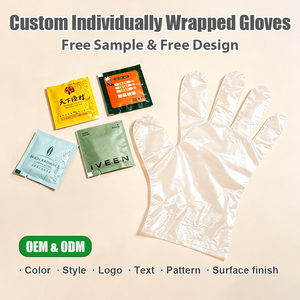
Custom Single Use Disposable Waterproof PE Gloves

Custom Single Use PE Waterproof Takeout Gloves

Send an Inquiry
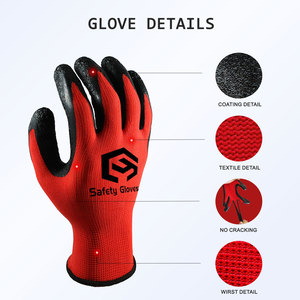
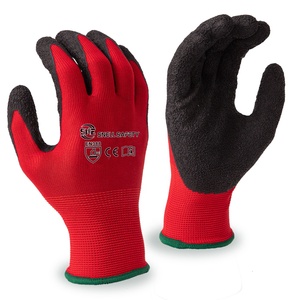
Crinkle Latex Coated Safety Work Gloves

Crinkle Latex Coated Construction & Mechanic Work Gloves

Send an Inquiry
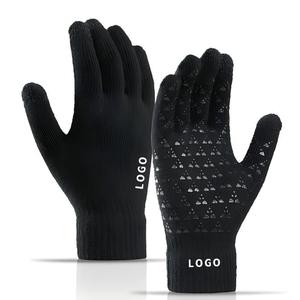
Anti slip Knit Winter Touchscreen Gloves

Custom Anti-Slip Unisex Winter Touch Screen Knit Gloves

Send an Inquiry
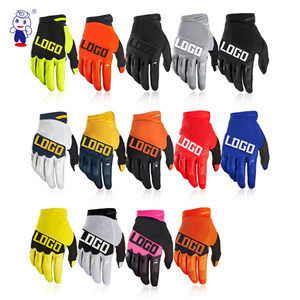
Customized Motorcycle Racing Gloves

Breathable High-Performance Motorcycle Racing Gloves

Send an Inquiry
Latex Coated Work Garden Safety Gloves

Worker Grip Protection Latex Coated Garden Safety Gloves

Send an Inquiry
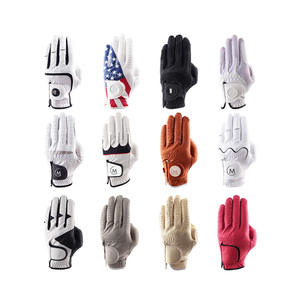
Premium Sheepskin Leather Golf Gloves

Wholesale Premium Sheepskin Leather Custom Golf Gloves

Send an Inquiry
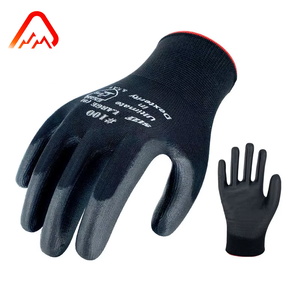
CE Approved EN388 PU Coated Work Gloves

CE Approved EN388 General Purpose PU Coated Work Gloves

Send an Inquiry
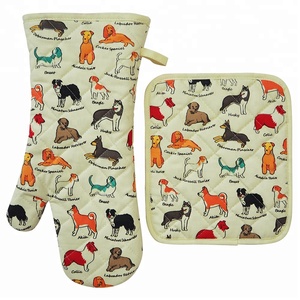
Heat Resistant BBQ Oven Mitts Set

Heat Resistant Custom Printed Kitchen BBQ Oven Mitt Set

Send an Inquiry
72%
Global Training Ball Market Share (China Hubs)
3,500+
Cycles Shooting Machine Durability Rating
< 1.2%
Max Sphericity Deviation Tolerances
100%
Eco-Friendly REACH & EN71 Compliance

1. The Landscape of China's Training Ball Manufacturing Industry

China continues to dominate global sports ball manufacturing, producing over 70% of the world's training and match-grade inflatable balls. Sourcing managers and procurement officers looking for high-durability training balls—spanning footballs, volleyballs, and basketballs—must navigate complex regional manufacturing clusters. The primary manufacturing ecosystems are concentrated in Guangdong, Zhejiang (Yiwu and Ningbo), and Jiangsu provinces, alongside specialized export clusters working in synergy with international quality standards.

Unlike premium match balls designed for single-game top performance, training balls require an engineered balance between extreme wear resistance, shape retention, consistent rebound, and cost efficiency. Modern training balls endure rigorous daily drills across variable climate conditions, artificial turf abrasion, and high-impact machine drills. Therefore, evaluating China's leading factories requires a deep dive into material science, panel bonding technologies, bladder retention engineering, and factory audit frameworks.

SEO & Sourcing Insight: Information gain in modern B2B procurement stems from understanding how material compositions (e.g., TPU vs. PU thickness) directly impact lifecycle cost-per-hour on training pitches. Leading Chinese exporters now offer hybrid thermal bonding that bridges the gap between low-cost machine stitching and high-end thermal match balls.

Technical Comparison: Casing Materials in Training Ball Production

The exterior cover dictates the ball's touch, water resistance, and abrasion lifespan. Chinese export factories typically utilize three main polymers:

Material Type Tensile Strength & Thickness Water Absorption Index Abrasion Resistance Recommended Application
Thermoplastic Polyurethane (TPU) 0.15mm - 0.35mm TPU + EVA Foam backing < 3.5% (Thermal Bonded) High (3,000+ Revolutions Taber Test) Academy & Club Daily Training Balls
Polyurethane (PU) - Microfiber 1.0mm - 1.4mm Structured Textured PU < 1.8% (Thermal Bonded) Very High (5,000+ Revolutions) Elite/Pro Level Training & Match Hybrid
Polyvinyl Chloride (PVC) 1.6mm - 2.5mm High-Density PVC > 8.0% (Machine Stitched) Moderate (Soft Ground / Grass Only) Entry-Level Recreational & Promotional

2. Engineering & Construction Breakthroughs: Hand Stitched vs. Machine Stitched vs. Thermo-Bonded

When specifying OEM orders with Chinese manufacturers, choosing the correct construction methodology is paramount to achieving the target price point and performance metrics:

Machine Stitching (MS)

Utilizes high-tensile polyester threads. Best suited for high-volume entry training balls. Cost-effective with rapid turnaround times (10,000 units/day per automated line).

Hybrid Panel Technology

Combines machine stitching with heat-activated seam sealing glue. Reduces water uptake significantly while protecting thread lines from abrasive artificial turf wear.

Thermo-Bonding (TB)

Seamless design activated via hydraulic heat molds. Completely eliminates water intake, delivers near-zero sphericity deviation (<1.0%), and guarantees true trajectory flight physics.

3. The Bladder Core & Carcass Architecture

A training ball is only as reliable as its internal pressure chamber. Chinese factories employ three main bladder systems:

  • Taiwan Synthetic Butyl Bladders: Premium standard for training balls. Features an air loss rate of less than 3% to 5% over 7 days, eliminating the need for daily inflation on the training pitch.
  • Natural Rubber / Latex Bladders: Provides superior soft touch and elastic responsiveness but exhibits high permeability, requiring reinflation every 24–48 hours. Preferred for professional match balls rather than heavy training.
  • Reinforced Wound Bladders (Nylon/Polyester Winding): High-end Chinese manufacturers wind 1,000+ meters of polyester yarn surrounding the inner core prior to panel lamination. This prevents "mushrooming" or ballooning under repeated high-velocity mechanical kicks.

4. Key Factory Evaluation Standards & Quality Control Audits

To avoid supply chain disruptions and defective shipments, foreign buyers must verify that potential Chinese vendors fulfill mandatory audit criteria:

Factory Audit Checkpoints for Importers

  • Social Compliance & Certifications: BSCI (Business Social Compliance Initiative), SEDEX 4-Pillar, ISO 9001:2015 Quality Management Systems.
  • Chemical Safety Approvals: REACH compliance (EU SVHC list free), EN71 Part 1-3 non-toxic certification, Phthalate-Free PVC/TPU compounds.
  • In-House Testing Protocols:
    • Shooting Machine Test: 2,000 to 3,500 impacts against a steel wall at 50 km/h.
    • Water Absorption Immersion Test: Ball rotated in water chamber for 2 hours; weight gain must remain under 5%.
    • Pressure Retention Test: Inflatable chambers checked via digital barometers over 72 consecutive hours.

5. Enterprise Advantages: Custom OEM/ODM Capabilities

Leading Chinese exporters distinguish themselves by providing comprehensive customization services tailored for private labels, athletic brands, and retail chains:

1. Custom Surface Texturing

3D mold engraving options including golf ball dimple texture, diamond micro-grain, and matte metallic finishes to enhance aerodynamic stability.

2. Digital & Screen Printing

Eco-friendly, water-based non-fade UV inks capable of reproducing complex multi-color vector artwork and pantone-matched brand schemes.

3. Flexible MOQ & Sampling

Rapid prototyping turnaround (5 to 7 days) with low initial minimum order quantities starting at 200–500 units per graphic design split across size curves (Sizes 3, 4, and 5).

6. Future Sourcing Trends: 2025–2030 Procurement Outlook

The sports manufacturing industry is evolving rapidly under global sustainability mandates and technological integration. Sourcing managers should align with Chinese factories pioneering the following advancements:

  • Bio-Based & Recycled Materials: Widespread adoption of rPET (recycled Polyethylene Terephthalate) backing fabrics derived from post-consumer plastic bottles, combined with bio-based solvent-free PU.
  • Automated Thermo-Bonding Assembly Lines: Robotics integration in panel alignment and heat curing, reducing human error, lowering defect rates below 0.2%, and stabilizing labor cost inflation.
  • Smart Training Integration: Embedding micro-chip sensors and NFC tags within the carcass to monitor spin rate, kick velocity, and flight trajectory via smartphone applications for training analytics.
Procurement Knowledgebase

Frequently Asked Questions (FAQ) for B2B Sourcing

Clear, direct answers to common procurement questions asked by global buyers, importers, and brand owners.

What is the typical Minimum Order Quantity (MOQ) for custom training balls in China?
For standard custom-printed training balls (machine stitched or hybrid), the standard factory MOQ ranges between 200 to 500 units per design/colorway. For high-end thermo-bonded training balls requiring custom mold development, MOQs typically start at 1,000 units.
How long does pre-production sampling and bulk mass production take?
Sample development usually takes 5 to 7 working days for digital artwork approval and physical prototyping. Bulk manufacturing lead times run between 20 to 35 calendar days following gold-sample approval, depending on order volume and seasonal shipping schedules.
What is the difference between FIFA Basic and FIFA Quality Pro certification for training balls?
FIFA Basic focuses on key performance criteria including weight, circumference, sphericity, rebound, and water absorption tailored for grassroots and training usage. FIFA Quality Pro enforces much stricter tolerances (e.g., lower sphericity deviation, minimal pressure loss, higher impact durability) required for official professional competition balls.
How are training balls packaged to optimize container shipping costs?
Training balls are deflated and individually packed in polybags before being packed into master cartons (typically 50 or 60 deflated balls per carton). Deflated shipping reduces total cargo volume by up to 75%, significantly lowering per-unit sea or air freight costs.
Can Chinese exporters handle private labeling, barcodes, and custom retail packaging?
Yes. Leading factories provide complete OEM/ODM solutions, including custom retail boxes, mesh carrying bags, hangtags, inner barcode stickers, and outer carton shipping marks compliant with Amazon FBA or direct-to-retail distribution center standards.
What shipping terms (Incoterms) are available for international orders?
Chinese exporters routinely support FOB (Free on Board - Ningbo/Shanghai/Shenzhen), CIF (Cost, Insurance, Freight), and DDP (Delivered Duty Paid) door-to-door options covering customs clearance, import tariffs, and final warehouse delivery.

Ready to Scale Your Training Ball Sourcing?

Partner directly with certified Chinese manufacturing leaders. Contact our engineering and export sales team today to request technical specifications, custom material swatches, or an instant factory quote.

Send an Inquiry