Why Choose Iron Grip Soccer Gloves for Global Sourcing? The question reaches beyond appearance and wholesale price. It concerns grip consistency, product testing, factory communication, and delivery reliability. FIFA’s Professional Football Report 2023 identified 128,694 professional male players across 135 countries. That global structure creates demand for dependable goalkeeper equipment in varied climates and playing conditions.
Iron Grip Soccer Gloves can support this demand when suppliers combine technical materials with disciplined quality control. A goalkeeper needs latex that responds during a wet morning session, not only under showroom lighting. Finger protection, seam strength, wrist closure, and ventilation also influence daily performance. Grand View Research’s Sports Apparel Market analysis reports sustained growth in global sports apparel demand. The report reinforces a practical sourcing point: buyers increasingly evaluate function, comfort, and product value together.
Details matter.
For importers, a reliable sourcing program should include material specifications, sample approval, batch inspection, packaging checks, and documented production timelines. The McKinsey Sporting Goods 2024 report also highlights changing consumer expectations around performance, product quality, and responsible supply chains. These expectations affect retailers, academies, clubs, and private-label brands.
No glove is perfect.
Even strong products may require adjustments for palm thickness, finger shape, climate, or goalkeeper level. That is why experienced buyers should compare samples rather than trust photographs alone. Iron Grip Soccer Gloves become a stronger global sourcing option when measurable specifications, transparent communication, and repeatable quality support the product promise. Suppliers should welcome testing, record defects honestly, and improve after feedback. Reliability is earned one shipment at a time.
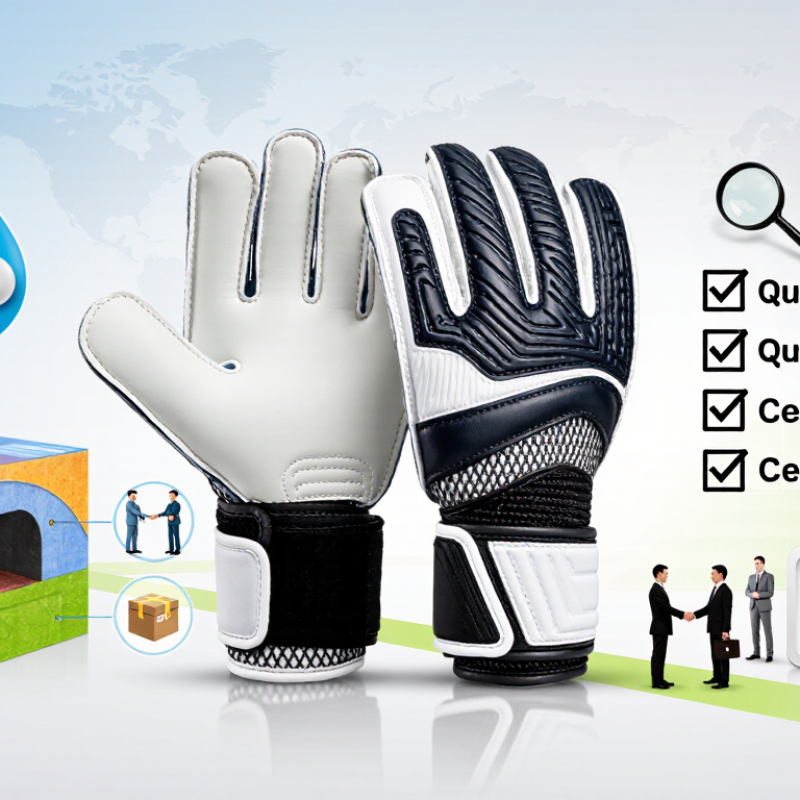
Iron Grip Soccer Gloves are goalkeeper gloves designed to improve ball control during catches, dives, and training drills. Their main feature is a tacky palm, often made with textured latex or a similar flexible material. This surface helps the goalkeeper hold a fast shot with fewer slips. Grip matters most.
The glove usually includes a padded backhand, elastic wrist support, and adjustable fastening. These parts protect the hand while keeping the fit stable during movement. In practical use, the palm should bend naturally without creating pressure around the fingers. A tight glove may feel responsive, but it can reduce comfort during long sessions. A loose glove can shift at the wrong moment.
Material selection affects sourcing decisions. Buyers should check palm thickness, stitching quality, size consistency, and abrasion resistance through samples and repeated handling. Wet conditions can reduce grip, even when the product performs well indoors. That limitation deserves honest testing. Color may also fade after frequent washing, and the best size chart will not fit every hand shape. Reliable suppliers should provide measurable specifications, inspection records, care instructions, and packaging details. These documents help importers compare products across markets and avoid confusing appearance with dependable performance.
| Data Dimension | Typical Specification or Fact | Global Sourcing Relevance |
|---|---|---|
| Product Definition | “Iron grip” is a descriptive term rather than a universally defined technical standard. In soccer, it generally refers to goalkeeper gloves designed to improve ball control and catching confidence. | Purchasers should verify measurable specifications instead of relying only on the product name. |
| Primary Use | Goalkeeping during training, amateur matches, youth football, school programs, and competitive play. | Different user groups require different balances of grip, durability, comfort, and price. |
| Palm Material | Goalkeeper gloves commonly use latex or synthetic latex on the palm. Natural latex can provide strong grip, while synthetic materials can offer increased consistency and durability. | Material composition should be stated clearly for performance comparison, allergen management, and product labeling. |
| Palm Cut | Common constructions include flat cut, roll finger, negative cut, and hybrid cut. Each design changes the internal fit, contact area, and finger mobility. | Cut selection helps buyers match the product to regional preferences and target playing levels. |
| Backhand Construction | Usually made with textile, mesh, latex, or synthetic foam layers to provide flexibility, impact cushioning, and ventilation. | Backhand materials affect comfort, product weight, breathability, and perceived quality. |
| Wrist Closure | A hook-and-loop wrist strap is widely used because it allows adjustable compression and easy removal. | Strap width, stitching, adhesion, and adjustability are important quality-control points. |
| Finger Protection | Some goalkeeper gloves include removable or fixed finger-spine supports, while others are flexible and provide no rigid protection. | Protection options should be specified separately because they influence flexibility, weight, fit, and retail positioning. |
| Grip Performance | Grip depends on palm compound, surface texture, moisture, ball condition, temperature, and maintenance. No glove provides identical grip in all conditions. | Samples should be tested in dry and damp conditions before large-volume purchasing. |
| Durability Factors | Abrasion resistance is influenced by palm formulation, stitching, playing surface, goalkeeper technique, cleaning, and storage. | Durability claims should be supported by wear testing and clear care instructions. |
| Size Range | Common goalkeeper glove sizes are approximately 4–11, with youth and adult size charts varying by hand length and palm width. | A size chart with hand measurements reduces returns and supports accurate international listings. |
| Fit Considerations | A secure fit should hold the glove in place without restricting finger movement or causing excessive pressure around the wrist. | Fit samples should be checked across several sizes and hand shapes before production approval. |
| Weather Suitability | Glove performance can change in rain, high humidity, cold temperatures, and on artificial turf. Wet-weather models may use palm compounds designed for damp conditions. | Regional climate and common playing surfaces should be included in the product specification. |
| Care Requirements | Gloves should generally be cleaned according to the material instructions, air-dried away from direct heat, and stored in a cool, ventilated place. | Care guidance can help reduce premature wear, customer complaints, and warranty disputes. |
| Quality Inspection Points | Inspect palm bonding, seam strength, finger alignment, strap attachment, size consistency, surface defects, and packaging accuracy. | A written inspection checklist improves consistency across production batches and suppliers. |
| Best Sourcing Approach | Request material details, size charts, test samples, customization options, packaging specifications, lead times, and pre-shipment inspection requirements. | A specification-based sourcing process makes quotations easier to compare and helps control quality across international markets. |
They help goalkeepers control shots during catches, dives, and training drills. A tacky palm reduces slipping. The gloves may also include padded backhands, wrist support, and adjustable fastening.
Textured latex or flexible foam improves contact with the ball. Softer palms may feel better in wet conditions. They can wear faster on artificial turf. There is no perfect material.
Wet conditions can reduce grip, even when gloves perform well indoors. Goalkeepers should test them with wet balls and damp palms. Drying time also matters. Rain exposes weaknesses.
The fit should feel secure without pressing tightly around the fingers. Slight fingertip space is acceptable. Folds across the palm can reduce control. Loose gloves may shift during a dive.
A padded backhand can soften contact during saves. Finger protection may reduce unwanted bending. However, stronger protection can limit finger movement. Comfort still matters.
Buyers should request palm thickness, abrasion results, seam-strength tests, and flex-cycle data. They should also check stitching density and wrist-closure strength. Factory photos are not enough. Samples reveal more.
Compare several sizes and batches under repeated handling. Test catches on grass and artificial turf. Record grip, wrist comfort, drying time, and visible wear. Small differences matter.
Follow the supplied washing and drying instructions. Avoid rough surfaces that quickly damage the palm. Check the thumb seam after repeated use. Color may fade after frequent washing.
Recycled fabric may support responsible sourcing goals. It does not guarantee strong grip or durability. Independent testing remains necessary. Appearance can mislead.
Iron Grip Soccer Gloves are goalkeeper gloves designed to improve control, confidence, and protection during training and competitive play. Their performance depends on a balanced combination of grip, flexibility, cushioning, wrist support, and a secure fit. High-quality materials, such as durable synthetic fabrics, breathable textiles, and responsive latex or similar catching surfaces, help goalkeepers handle the ball in different weather and playing conditions. Reinforced stitching, ergonomic cuts, adjustable wrist closures, and impact-absorbing padding can further improve comfort and durability.
For global sourcing, Iron Grip Soccer Gloves offer opportunities for buyers seeking practical, customizable, and scalable sports equipment. Suppliers should be evaluated through material specifications, product samples, manufacturing capacity, quality-control procedures, packaging options, and communication reliability. Buyers should also confirm sizing consistency, color and design requirements, production lead times, minimum order quantities, and shipping terms before placing an order. A clear inspection process and well-defined purchase agreement can help reduce quality risks and support stable, long-term supply.