Welcome to Spogen Pvt Ltd — OEM Sports Goods Manufacturing Since Sialkot's Earliest Export Era

0%

A Custom Goalkeeper Gloves Manufacturer turns a goalkeeper’s playing demands into measurable product specifications. This process includes palm foam, finger protection, wrist closure, stitching, sizing, and artwork. It is not simply adding a club logo. It is closer to building a glove around movement, weather, and confidence.

FIFA’s Professional Football Report 2023 recorded 128,694 professional players across 3,986 clubs worldwide. That figure shows a broad, competitive user base, although it does not isolate goalkeeper equipment demand. Industry reports, including Grand View Research’s sports equipment analysis, also indicate continued global growth in sports equipment consumption. The numbers are useful, but imperfect. Goalkeeper glove data remains fragmented.

“The goalkeeper is the first attacker,” goalkeeper coach Frans Hoek has often emphasized. His principle explains why glove design affects more than catching. A goalkeeper may need firm wrist support during a driven pass, flexible fingers during a one-handed save, and reliable latex grip on a wet training ground. A serious Custom Goalkeeper Gloves Manufacturer therefore tests samples with real goalkeepers, not only factory measurements. Small details matter. Palm thickness changes handling. Seam placement changes comfort. A tight wrist strap can restrict movement.

Quality claims still require evidence. Buyers should examine material specifications, abrasion testing, sample approval, production consistency, and after-sales feedback. One attractive prototype proves little. A manufacturer may promise professional performance, yet the glove can fail after several sessions. That is where experience matters. Customization creates value only when design, testing, and repeatable manufacturing work together.
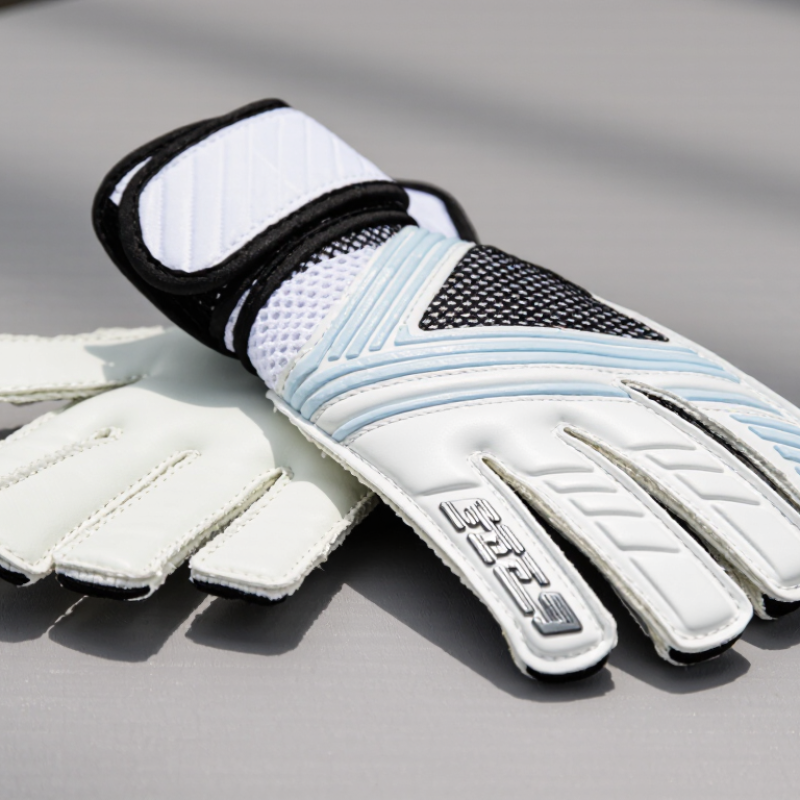
What Is a Custom Goalkeeper Gloves Manufacturer?

What Is a Custom Goalkeeper Gloves Manufacturer?

A custom goalkeeper gloves manufacturer develops gloves to a team’s exact playing needs, not merely its preferred colors.

The work combines pattern engineering, foam selection, stitching, and repeated goalkeeper testing. Grand View Research estimated the global sports equipment market at about US$480 billion in 2023, with growth near 5.5% annually through 2030. Goalkeeper gloves are a small niche within that figure, so manufacturers must understand specialized performance rather than rely on broad market numbers.

A serious manufacturer begins with a technical brief. It records palm foam thickness, latex grip, finger protection, wrist closure, backhand material, and size grading. A goalkeeper may request softer foam for wet grass, stronger stitching for training, or a tighter wrist fit for quick throws. Samples should be tested in rain, dust, and repeated catching drills. Real hands expose problems that factory photos hide.

They really do.

Quality control should include measurement checks, seam inspection, adhesion testing, and batch records. The FIFA Quality Programme shows how sports products benefit from controlled testing, although goalkeeper gloves require their own practical criteria.

A manufacturer should also disclose minimum order quantities, sample fees, production tolerances, and expected durability. According to a 2024 sporting-goods market analysis by Fortune Business Insights, online purchasing and product customization are supporting continued equipment-market expansion.

However, customization can increase waste and lead time. That weakness deserves honest discussion before production begins.

How Custom Goalkeeper Gloves Are Designed and Developed

What Is a Custom Goalkeeper Gloves Manufacturer?

How Custom Goalkeeper Gloves Are Designed and Developed

A custom goalkeeper gloves manufacturer turns performance requirements into tested glove designs. The process usually begins with a detailed discussion about hand shape, playing surface, weather, and personal preferences. Fit comes first. Designers measure finger length, palm width, wrist size, and thumb movement. These details guide the glove cut, finger construction, and closure system.

Material selection requires practical knowledge. Goalkeepers may choose different latex thicknesses for grip, cushioning, and ball control. A softer palm can feel responsive, but it may wear faster on rough surfaces. The backhand also needs careful development. Breathable fabric, flexible foam, and protective zones must work together without restricting movement. Small details matter. Stitching tension, seam placement, and wrist support can change the glove’s feel.

A manufacturer then creates a digital pattern and a physical prototype. Testers examine catching, punching, comfort, and durability during realistic training sessions. They also record performance in rain, heat, and repeated contact with the ground. The first sample may fail. Fingers can feel tight, the wrist strap may shift, or the palm may crease during a catch. Those problems require honest review and another adjustment. Reliable development includes material records, measured quality checks, and feedback from experienced goalkeepers. No design suits every player, so the final glove reflects careful testing rather than attractive specifications alone.

What Materials and Technologies Are Used in Production?

A custom goalkeeper gloves manufacturer combines material science with hand-specific engineering. The palm usually uses natural latex for elastic grip and impact cushioning. Synthetic latex offers more consistent thickness and better resistance in wet conditions. A thin foam layer, often EVA or polyurethane, absorbs ball impact behind the palm. The backhand may combine neoprene, mesh, and flexible latex panels. These materials reduce weight without making the glove feel empty.

Production technology matters as much as material choice. Manufacturers use digital hand patterns to adjust finger length, wrist width, and negative or roll-finger construction. Thermal bonding can reduce bulky seams. Silicone printing adds control zones across the backhand and fingers. Some factories also use laser cutting for cleaner edges and tighter repeatability. Textile Exchange’s 2024 Materials Market Report found recycled polyester represented about 14% of global polyester production in 2023. This supports recycled linings and mesh, although recycled content does not automatically improve glove performance.

Grip durability remains difficult. Natural latex can feel exceptional, yet it may wear quickly on rough artificial turf. A custom producer should test abrasion, seam strength, wet grip, and repeated flexing before approving a design. There is no single universal FIFA performance standard for goalkeeper gloves, so factory protocols must be transparent and repeatable. Independent laboratory checks add credibility. Even then, small differences in latex density can change the result. That detail is easy to miss.

What Is a Custom Goalkeeper Gloves Manufacturer? - What Materials and Technologies Are Used in Production?

Production Dimension Common Materials Manufacturing Technologies Customization Options Performance Considerations
Glove Palm Latex foam with different densities and surface textures; synthetic latex may also be used in budget-oriented designs. Foam lamination, embossed or textured surface finishing, precision die cutting, and adhesive bonding. Palm thickness, foam density, surface texture, color, cut shape, and grip specification. Natural latex generally provides strong grip potential, while durability and abrasion resistance depend on formulation, thickness, field conditions, and maintenance.
Backhand Latex, polyurethane, polyester, nylon, mesh, or layered textile composites. Foam-backed lamination, screen or heat-transfer decoration, molded elements, and stitched panel construction. Backhand material, padding level, ventilation zones, graphics, color layout, and surface finish. Thicker foam improves impact cushioning but can increase weight and reduce flexibility. Mesh and perforated textiles can improve airflow.
Glove Cut Materials may include latex palm sheets, polyester, nylon, spandex, and synthetic leather for gussets or side panels. Flat cut, roll finger, negative cut, hybrid cut, computer-controlled pattern cutting, and reinforced stitching. Finger shape, internal volume, seam placement, gusset width, wrist opening, and fit profile. Negative cuts usually create a close fit. Roll and hybrid constructions can increase latex-to-ball contact or provide additional internal room.
Finger Protection Removable or integrated thermoplastic support elements, commonly based on flexible plastic materials. Segmented support molding, stitched channels, removable insert pockets, and size-specific fitting. Protection on selected fingers, insert stiffness, removable or fixed construction, and left- or right-hand configuration. Protection systems are designed to limit excessive finger extension. They must balance support, comfort, dexterity, and compliance with match requirements.
Wrist Closure Elastic, polyester, nylon, hook-and-loop fastening materials, latex, and synthetic leather reinforcement. Elastic wrist construction, wraparound fastening, bartack reinforcement, and multi-panel stitching. Strap length, closure direction, wrist width, fastening position, pull tabs, and printed or embossed details. A secure closure helps stabilize the glove. Excessive compression may restrict circulation and reduce comfort during extended use.
Textile Lining Polyester, nylon, cotton blends, brushed tricot, spacer fabric, and moisture-managing knitted textiles. Knitted glove-body construction, moisture-wicking treatment, breathable panel integration, and bonded lining. Lining weight, softness, ventilation layout, cuff material, and interior finishing. Textile selection affects moisture management, drying time, comfort, stretch, and the ease of putting on or removing the glove.
Grip and Surface Engineering Textured natural latex, synthetic latex, silicone-based print elements, and polyurethane details. Laser or engraved texture creation, molded embossing, screen printing, silicone printing, and controlled surface coating. Texture pattern, contact zones, grip emphasis, visual graphics, and weather-specific palm formulation. Grip performance varies with wetness, temperature, ball surface, palm wear, and cleaning practices. No palm compound performs identically in every condition.
Seams and Reinforcement Polyester or nylon sewing thread, elastic tape, synthetic leather patches, and abrasion-resistant textile panels. Flatlock or conventional stitching, double stitching, bartacking, seam sealing, and stress-point reinforcement. Thread color, seam position, reinforcement zones, stitch density, and exposed or concealed seam design. Reinforcement can improve structural durability, while excessive seam bulk may affect ball feel and hand mobility.
Pattern Development Digital pattern files, paper templates, sample fabrics, palm latex, and fitting components. CAD pattern design, size grading, 3D hand-form evaluation, prototype sampling, and fit testing. Hand measurements, size range, finger proportions, wearer age group, preferred fit, and regional sizing requirements. Accurate hand measurements and repeated prototype testing help reduce fit problems caused by differences in finger length, palm width, and hand volume.
Decoration and Identification Water-based inks, heat-transfer films, silicone inks, embroidery thread, and compatible synthetic labels. Screen printing, heat transfer, sublimation on suitable textiles, embroidery, embossing, and laser marking. Colors, artwork, player numbers, team marks supplied by the customer, packaging text, and care-label information. Decoration should be tested for adhesion, flexibility, colorfastness, and resistance to washing, perspiration, and repeated ball contact.
Quality Control Incoming latex, fabric, thread, fastening components, protective inserts, and packaging materials. Material inspection, dimensional checks, visual inspection, seam-strength checks, palm adhesion evaluation, and sample wear testing. Inspection standards, sample approval process, measurement tolerances, packaging requirements, and batch documentation. Consistent quality depends on controlled material specifications, repeatable production parameters, traceability, and testing under representative use conditions.
Care and Maintenance Glove-safe cleaning products, clean water, absorbent towels, and breathable storage materials. Care-label development, washing instruction validation, drying guidance, and packaging ventilation design. Care instructions, packaging format, storage bag, size labels, and user information cards. Latex palms should generally be cleaned according to the manufacturer’s instructions, dried away from direct heat, and stored in a cool, ventilated place to help preserve performance.

Custom goalkeeper glove manufacturers typically combine material selection, hand-pattern development, prototype sampling, assembly, decoration, and quality inspection to produce gloves according to a customer’s requested fit, performance profile, appearance, and quantity.

How Are Custom Goalkeeper Gloves Manufactured and Tested?

A custom goalkeeper gloves manufacturer turns a playing concept into a measurable product. The process usually starts with hand measurements, finger-spread preferences, and the goalkeeper’s playing surface. Designers then create digital patterns for the palm, backhand, gussets, and wrist strap. A sample maker cuts latex, textile, and foam layers before stitching them by hand. Small changes matter. A two-millimeter fit difference can affect finger control.

Material selection also requires evidence. Textile Exchange’s 2024 Materials Market Report recorded 124 million tonnes of global fiber production in 2023; polyester represented about 57%. Manufacturers therefore assess recycled and conventional textiles for stretch, drying speed, and seam stability. The palm foam receives wet and dry grip trials, while the backhand undergoes impact and flex testing. Abrasion checks can follow adapted laboratory methods based on ISO 12947. Seam strength is measured after repeated pulls, twisting, and ball contact. Not every test predicts a rainy match.

Reliable factories document batch numbers, latex thickness, curing temperatures, and rejected pieces. They repeat tests after washing and heat exposure, because gloves often lose shape before the palm visibly fails. Independent laboratories can verify color fastness, material performance, and chemical safety. Internal testing is useful, but it can be biased. A better manufacturer admits that limitation and compares laboratory results with goalkeeper field trials. Real hands remain difficult to simulate.

How to Choose the Right Custom Goalkeeper Gloves Manufacturer

What Is a Custom Goalkeeper Gloves Manufacturer?

A custom goalkeeper gloves manufacturer produces gloves based on a club’s design, playing surface, and fit requirements. Custom work can include palm latex, finger protection, backhand materials, wrist closures, colors, and printed details. The right manufacturer should explain these options clearly, not simply promise the lowest price. Ask about latex thickness, cut type, stitching quality, and available sample sizes. A reliable supplier should also provide material specifications and realistic production timelines.

How to Choose the Right Custom Goalkeeper Gloves Manufacturer

Request a physical sample before approving bulk production. Check the grip on a clean, dry ball, then inspect it after repeated catches. Feel the wrist strap. It should close firmly without restricting movement. Look inside the glove for rough seams, loose threads, or uneven padding. A factory with technical knowledge will discuss goalkeeper use, weather conditions, and training frequency. Communication matters too. Delayed replies can become costly during revisions. No supplier is flawless. A sample may feel excellent, yet require a better thumb shape or tighter cuff. That is normal, but the manufacturer should respond professionally and record each change.

Tips: Compare at least three suppliers. Ask for test photos and material data. Confirm minimum order quantities, replacement policies, packaging details, and inspection procedures in writing. Avoid choosing from images alone. Small details matter. A clear approval sample can prevent disappointing bulk delivery.

How to Choose the Right Custom Goalkeeper Gloves Manufacturer

Use this practical procurement weighting model to compare manufacturers. Product performance, customization capability, and quality control should receive the greatest attention, while MOQ and lead time help determine production flexibility.

Recommended evaluation weights: the total equals 100% and is intended as a neutral sourcing framework rather than a comparison of individual companies or brands.

FAQS

What does a custom goalkeeper glove manufacturer do?

It turns hand measurements, playing conditions, and design preferences into tested glove samples. Fit comes first.

Which measurements affect glove fit?

Designers measure finger length, palm width, wrist size, and thumb movement. A two-millimeter difference can affect control.

How are materials selected for custom goalkeeper gloves?

Palm latex is chosen for grip, cushioning, and durability. Softer latex feels responsive but may wear faster on rough ground.

What parts of the glove can be customized?

Custom options may include palm latex, finger protection, backhand fabric, wrist closure, colors, and printed details.

How is a glove sample developed?

Designers create a digital pattern for the palm, backhand, gussets, and wrist strap. Sample makers then cut and stitch each layer.

How are custom goalkeeper gloves tested?

Testers examine catching, punching, comfort, flexibility, and durability during realistic training. Trials should include dry, wet, hot, and repeated-ground conditions.

What problems can appear during sample testing?

Fingers may feel tight. A wrist strap can shift, or the palm may crease during catches. These failures require recorded adjustments.

How should a buyer evaluate a manufacturer?

Request a physical sample and test it with a clean ball. Inspect seams, padding, cuff movement, and grip after repeated catches. Images are not enough.

What quality information should a manufacturer provide?

Ask for material data, latex thickness, batch records, inspection procedures, and realistic production timelines. Confirm replacement terms in writing.

Can laboratory testing guarantee match performance?

No. Laboratory tests measure useful properties, but real hands, rain, movement, and ground contact remain difficult to simulate. That limitation matters.

Conclusion

A Custom Goalkeeper Gloves Manufacturer specializes in developing goalkeeper gloves tailored to the needs of teams, academies, clubs, and individual players. The process begins with understanding the intended playing conditions, fit preferences, performance goals, and visual requirements. Designers then create glove concepts that balance finger protection, flexibility, wrist support, grip, comfort, and durability. Materials may include different latex formulations, breathable textiles, cushioning foams, elastic wrist components, and protective elements selected for specific performance needs.

During production, each glove is carefully cut, stitched, bonded, and assembled according to the approved design. Manufacturers typically inspect dimensions, seam strength, palm consistency, closure quality, flexibility, and resistance to repeated use. Product testing under realistic training and match conditions helps identify areas for improvement before final delivery. When choosing a manufacturer, buyers should evaluate technical expertise, material quality, customization capabilities, communication, production consistency, testing procedures, lead times, and after-sales support. A reliable partner should clearly explain the development process and provide solutions that match the goalkeeper’s requirements and budget.


Ethan

Ethan

Ethan is a professional marketing specialist with extensive experience in developing clear, engaging, and results-driven content for business audiences. As a dedicated member of the company’s marketing team, he has developed a deep understanding of the company’s products, services, and customer......