Welcome to Spogen Pvt Ltd — OEM Sports Goods Manufacturing Since Sialkot's Earliest Export Era
Choosing reliable suppliers matters when performance, comfort, and delivery consistency affect every goalkeeper’s decision. This guide explores the Top 10 Knitted Goalkeeper Gloves Wholesale Suppliers for clubs, retailers, academies, and independent sports businesses. It focuses on practical buying factors, including yarn quality, palm construction, wrist support, sizing accuracy, customization, minimum order quantities, and shipping reliability.
Knitted gloves should feel flexible without becoming loose after repeated training sessions. A dependable supplier should explain material blends, production standards, inspection procedures, and replacement policies clearly. Small details matter. Check the cuff tension, seam finishing, grip texture, and packaging before placing a large order. Samples can reveal weaknesses that product photos hide. They also help buyers compare breathability during warm sessions and warmth during colder matches.
This overview is based on common wholesale evaluation methods and real purchasing considerations. Supplier reputations can change, however. A company with excellent reviews may still struggle with seasonal demand or communication. That possibility deserves attention. Buyers should verify current certifications, factory information, lead times, and payment terms independently. The phrase Knitted Goalkeeper Gloves Wholesale covers many product levels, from basic training gloves to reinforced match models. Not every supplier serves the same market.
The selected companies are compared for product consistency, service responsiveness, customization support, and overall value. Pricing remains important, but the cheapest option may create higher return rates later. Reliable evidence beats attractive promises. Careful testing leads to better decisions.
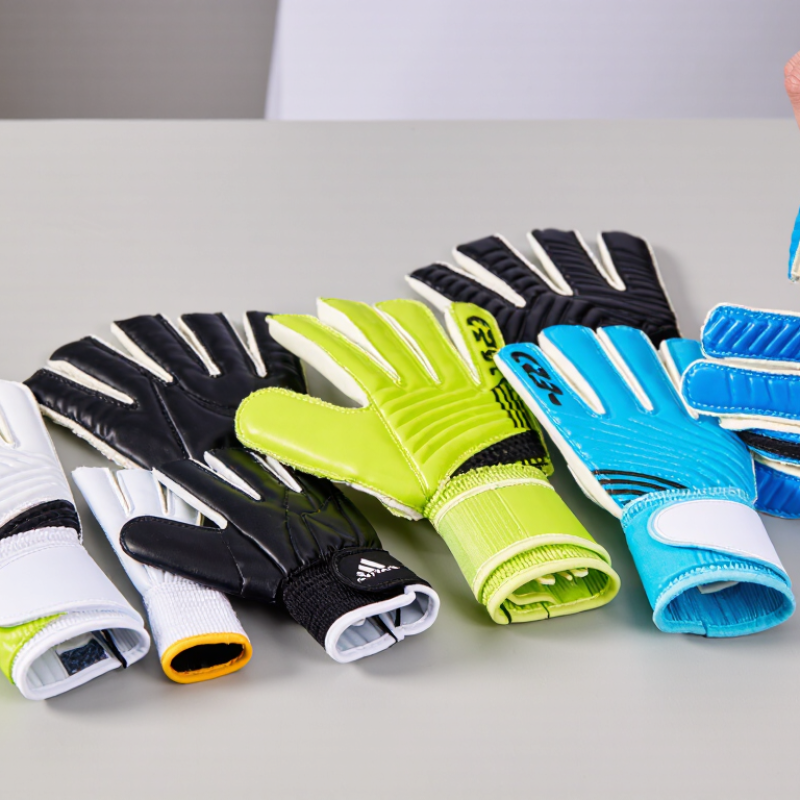
Knitted goalkeeper gloves usually combine a flexible textile backhand with a grip-focused palm, often made from latex or a similar coated material. The knitted section helps airflow and allows natural hand movement during training or matches. It may also reduce bulk when players close their fingers. However, knit construction alone does not guarantee strong protection or durability.
For wholesale buyers, the intended use matters more than appearance. Youth academies may need lightweight gloves with simple wrist closures and clear size grading. Competitive clubs often request thicker palms, reinforced stitching, and adjustable wrist straps. Retailers should examine color consistency, palm adhesion, seam strength, and packaging before placing large orders.
A practical sample test includes catching a wet ball, bending the fingers repeatedly, and checking the cuff after washing.
Sizing deserves careful attention. A glove that feels tight can restrict movement, while excess space may weaken ball control. Suppliers should provide measured size charts, not vague labels. Material certificates and production records can also support reliable purchasing decisions. Some wholesale teams focus heavily on low unit prices, but that choice can increase replacement costs later. This is easy to overlook. Even experienced buyers may judge quality from the palm alone, although the backhand, thumb gusset, and wrist seam often reveal broader construction issues.
Supplier evaluation should begin with measurable evidence, not attractive product photos. The FIFA Quality Programme testing framework emphasizes durability, grip, impact absorption, and dimensional consistency in football equipment. Ask suppliers for test reports, material specifications, and batch records. A knitted glove should feel stable around the wrist, with even stitching and no loose loops after repeated stretching.
Trade data also deserves attention. International Trade Centre statistics for HS 6116 show substantial global trade in knitted and crocheted gloves, but the category includes many non-sports products. Therefore, import volume alone cannot prove goalkeeper-glove expertise. Request recent shipment references, production capacity, and defect rates. Clarify whether latex palms, elastic cuffs, and printed panels come from controlled sources. Small details matter.
Pricing needs a wider calculation. Include samples, packaging, inspection, freight, replacement terms, and minimum order quantities. A low quotation may hide inconsistent sizing or weak seam reinforcement. SGS quality guidance commonly recommends documented inspection criteria and sampling plans for repeat orders. Use them carefully; a sample can pass while later batches drift. That is the uncomfortable risk.
A practical comparison sheet can score grip, abrasion resistance, sizing accuracy, delivery reliability, communication, and corrective action. Require pre-shipment photographs and random inspections. Keep records of every complaint. My own caution is simple: supplier promises are not performance data. Test gloves in wet and dry conditions, under real goalkeeper movement, before approving wholesale quantities.
Top 10 Knitted Goalkeeper Gloves Wholesale Suppliers
A strong Top 10 list should measure more than wholesale price. It should examine knitting quality, palm grip, stitching, sizing, and production consistency. Knitted backs improve flexibility and ventilation during long training sessions. However, loose cuffs can reduce wrist support. I would request samples before accepting any large order.
Textile Exchange’s 2024 Materials Market Report states that polyester represented about 59% of global fiber production in 2023. This matters because many knitted goalkeeper gloves use polyester blends for stretch and drying performance. Suppliers should disclose fiber content, recycled material percentages, and colorfastness results. Clear technical sheets show professional control. Vague claims deserve caution.
The best suppliers usually provide size charts, pre-production samples, carton dimensions, and stable lead times. Ask whether each pair receives palm inspection and seam testing. A useful purchasing benchmark is a defect rate below 2%, although smaller factories may struggle to maintain it. That figure should be verified, not merely promised. The International Organization for Standardization also emphasizes accurate textile care labeling through ISO 3758, which helps reduce avoidable washing damage. Still, no report replaces hands-on testing. A glove may look excellent under showroom lights, then wrinkle around the thumb after repeated catches. Pricing should include packaging, inspection, shipping, and possible replacement costs. The ranking may never be perfect. Supplier records change.
Anonymous benchmark based on common wholesale selection criteria: product quality, customization, order flexibility, delivery reliability, and buyer support.
The chart compares ten anonymous supplier profiles using a composite wholesale suitability score out of 100. Higher scores indicate stronger overall performance across glove durability, customization options, minimum-order flexibility, production consistency, and delivery support. Supplier names and brand information are intentionally omitted.
Comparing ten knitted goalkeeper glove suppliers requires more than checking the lowest quote. Experienced buyers should examine stitching density, palm grip, wrist support, and fabric recovery after repeated use. Ask for physical samples before placing a bulk order. A glove may look strong online but feel loose around the fingers. Pricing should include packaging, sample fees, shipping, and any customization charges. Cheap units can become expensive when returns or inconsistent sizing appear.
Quality reports should explain materials, seam strength, and performance after washing. Reliable suppliers provide clear specifications and stable production schedules. Customization may include colors, woven labels, logos, cuff patterns, and packaging. Confirm artwork limits, sample approval procedures, and production timelines in writing. Minimum orders vary widely. A lower MOQ helps new retailers test demand, while larger orders usually reduce unit pricing. However, excessive inventory can tie up cash.
Tips: Compare every quote using the same glove specifications. Request size charts and a pre-production sample. Test grip on a dry ball and a slightly damp ball. Keep written records of defects, delivery dates, and replacement terms. One overlooked detail is cuff elasticity; it can weaken faster than expected. I would also question unusually perfect claims. Supplier transparency matters more than polished promises.
Choosing among the top ten knitted goalkeeper glove wholesale suppliers requires more than comparing prices. Start with product performance, not attractive catalogs. Request samples in several sizes, then inspect stitch density, wrist elasticity, palm grip, and seam strength. Test the gloves on wet grass and hard training surfaces. Small flaws become expensive returns.
A reliable supplier should explain material specifications, production capacity, minimum order quantities, and lead times clearly. Ask for recent quality-control records and a sample inspection report. Confirm whether the supplier can maintain consistent colors and measurements across repeated orders. Communication matters too. Slow replies may signal later delays.
Check packaging details, labeling support, payment terms, and documented factory practices. Suppliers should follow applicable product, labor, and import requirements in your target market. A simple scorecard can compare quality, price, delivery, service, and risk. Do not reward the cheapest quote automatically. It may exclude packaging, testing, or shipping costs. No scorecard is perfect.
A practical trial order can reveal more than a polished sales presentation. Measure delivery time, defect rates, and response speed after purchase. Keep written records and ask difficult questions before signing. Some buyers overlook replacement policies because the first sample looks excellent. That is a costly assumption. Leave room for improvement, because your first supplier decision may not be your final one.
They usually combine a flexible knitted backhand with a latex or coated palm. The knit improves airflow and finger movement. Knit alone is not enough.
Youth academies may prefer lightweight gloves and simple wrist closures. Competitive clubs often need thicker palms, reinforced stitching, and adjustable wrist straps. Appearance can mislead.
Catch a wet ball, bend the fingers repeatedly, and inspect the cuff after washing. Test grip on dry and slightly damp balls. Small tests reveal hidden weaknesses.
Suppliers should provide measured size charts instead of vague labels. Tight gloves can restrict movement. Extra space may reduce ball control.
Check the palm, backhand, thumb gusset, wrist seam, and cuff elasticity. Examine stitching density and seam strength. The palm is not the whole glove.
Compare unit prices with packaging, samples, shipping, and customization charges. Cheap units may create higher replacement or return costs. This is easy to miss.
Options can include colors, woven labels, logos, cuff patterns, and packaging. Confirm artwork limits, sample approval, and production dates in writing.
A lower MOQ can help new retailers test demand. Larger orders may reduce unit prices but increase inventory risk. Cash can become trapped.
Request material certificates, production records, specifications, and quality reports. Keep written records of defects, delivery dates, and replacement terms. Perfect claims deserve questions.
This guide explores how knitted goalkeeper gloves support comfort, flexibility, grip, and protection during training and competitive play. It explains their main wholesale uses, including sports retailers, team outfitting, academies, and custom equipment programs. Buyers will also learn how to evaluate suppliers by examining material quality, stitching durability, palm performance, sizing consistency, production capacity, communication, packaging, and delivery reliability.
The article presents ten types of reputable wholesale supplier options without focusing on brand names, helping businesses compare pricing, product quality, customization services, sample policies, and minimum order quantities. It also explains how to balance budget and performance when selecting Knitted Goalkeeper Gloves Wholesale products. By identifying customer needs, checking supplier capabilities, requesting samples, and reviewing order terms carefully, businesses can choose a dependable partner that supports consistent quality, flexible purchasing, and long-term growth.