Welcome to Spogen Pvt Ltd — OEM Sports Goods Manufacturing Since Sialkot's Earliest Export Era
Custom Soccer Team Kits have moved beyond basic match clothing. They now represent identity, local pride, sponsor visibility, and commercial reach. A well-designed kit can connect a youth academy in Manchester with supporters in Manila. That connection matters in a crowded global sportswear market.
Grand View Research estimates that the global sports apparel market reached approximately $248.6 billion in 2023. Its report also projects continued growth through 2030, although market estimates vary by definition and region. That limitation deserves attention. Industry data often combines professional jerseys, training wear, footwear, and general athletic clothing. It does not always measure custom team orders separately.
This guide evaluates ten leading kit styles for international buyers. The review considers fabric performance, sizing consistency, printing quality, minimum order quantities, delivery reliability, and customization flexibility. It also reflects practical buying concerns, such as whether a sponsor logo remains sharp after repeated washing. Deloitte’s Annual Review of Football Finance shows football’s growing commercial strength, particularly across major European leagues. Meanwhile, consumer research from McKinsey highlights rising expectations for personalization and flexible purchasing experiences. These trends support the demand for distinctive teamwear, but they do not guarantee quality.
No ranking is perfect. A visually impressive kit may use weaker fabric. A low-cost supplier may offer limited after-sales support. Buyers should request samples, confirm measurements, and review production timelines before placing large orders. The ten options below are therefore assessed as practical choices, not absolute winners, for clubs, schools, academies, retailers, and international distributors.
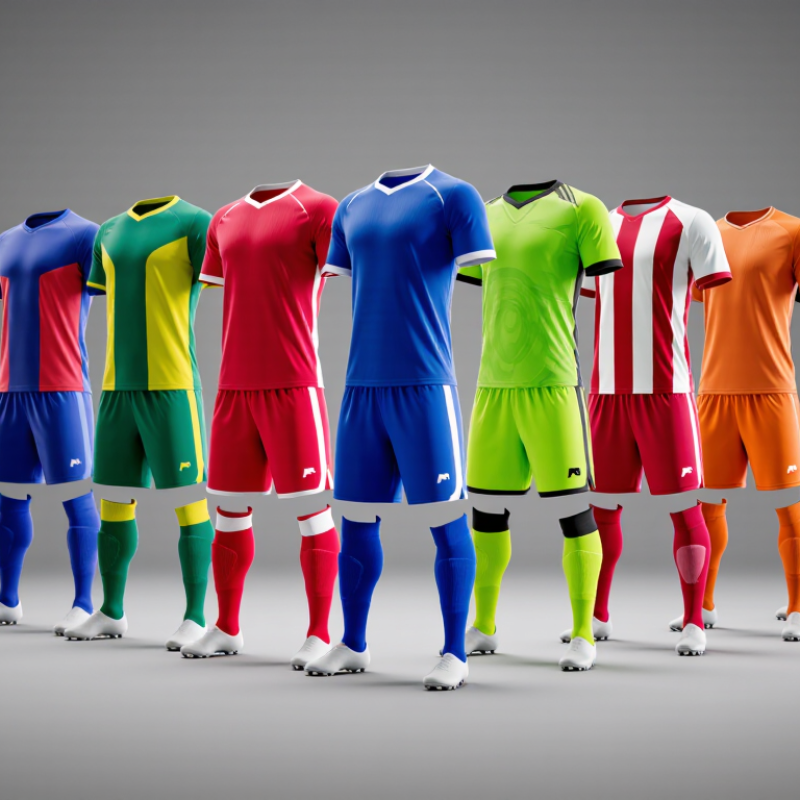
What Are the Top 10 Custom Soccer Team Kits for Global Buyers?
Custom soccer team kits are coordinated match uniforms designed around a team’s identity, fit, and playing conditions. They usually include jerseys, shorts, socks, player names, numbers, and approved team colors. For global buyers, customization also means choosing fabric weight, collar shape, sizing systems, packaging, and delivery terms.
The market is becoming more technical. Fortune Business Insights valued the global sports apparel market at USD 203.37 billion in 2023. It forecasts a 6.0% compound annual growth rate through 2032. Textile Exchange reported 124 million tonnes of global fiber production in 2023. Polyester remained a major material choice. However, material selection should not follow trends blindly. Breathability, colorfastness, and washing durability matter more during weekly matches. A beautiful kit can still fail after repeated use.
Tips: Request a physical sample before placing a bulk order. Check measurements in centimeters, not only local size labels. Ask for fabric test results and production lead times. Confirm whether printed numbers resist peeling after twenty washes. Small details matter. Buyers should also compare minimum order quantities and replacement policies. These checks reduce surprises, although no supplier process is perfect. Mistakes can still happen. Teams should allow extra time for corrections before tournaments.
When comparing custom soccer team kits, start with fabric performance, not appearance. A lightweight polyester blend should move sweat away from the skin and remain comfortable during long matches. Breathability matters in humid regions, while a slightly heavier fabric may suit cooler climates. Fit matters most. Ask for a size chart with chest, waist, sleeve, and inseam measurements. Player feedback can reveal problems that sample photos hide.
Customization quality deserves careful checking. Compare print sharpness, stitching, badge placement, number durability, and color consistency across shirts, shorts, and socks. Request a physical sample before ordering a full team set. Wash it several times. Check shrinking, fading, loose threads, and peeling graphics. I have seen attractive samples fail after repeated washing, so visual quality alone is unreliable. Digital proofs should show exact colors and positions, but screen colors can still mislead buyers.
Global buyers should also assess minimum order quantities, production time, delivery estimates, and replacement policies. A low unit price may become expensive after shipping, alterations, or delayed delivery. Ask whether the supplier documents fabric composition and follows applicable product safety requirements in the destination market. Clear communication is a practical measure of reliability. Keep written records of measurements and approved artwork. My own comparison process is not perfect; I once prioritized fast delivery and underestimated sizing differences between regions. That mistake made the final cost higher. Teams should compare complete quotations, sample evidence, and service responses before choosing among the top custom kit options.
| Rank | Custom Kit Type | Best for Global Buyers | Typical Fabric | Customization Method | Typical Fabric Weight | Main Performance Benefit | Key Quality Check |
|---|---|---|---|---|---|---|---|
| 1 | Full Sublimated Match Kit | Competitive clubs requiring coordinated shirts, shorts and socks | Moisture-wicking polyester knit | Full-panel dye sublimation | 140–160 gsm | Durable graphics with no heavy print layer | Color consistency across all garment panels and sizes |
| 2 | Classic Striped Team Kit | Traditional clubs, schools and community teams | Polyester interlock or lightweight mesh | Sublimated stripes with heat-applied or sewn details | 140–170 gsm | Recognizable team identity and reliable color blocking | Stripe alignment at side seams and underarm panels |
| 3 | Recycled-Polyester Eco Kit | Organizations with sustainability purchasing policies | Recycled polyester performance fabric | Sublimation or low-add-on transfer printing | 145–170 gsm | Lower reliance on virgin polyester while retaining quick-dry performance | Request recycled-content documentation and colorfastness results |
| 4 | Youth Development Kit | Junior academies, schools and youth tournaments | Lightweight polyester mesh or interlock | Sublimation with flexible numbering and lettering | 130–155 gsm | Lightweight comfort and easy size grading | Accurate youth measurements and reinforced stress points |
| 5 | Climate-Adapted Mesh Kit | Teams playing in hot or humid regions | Breathable polyester mesh with ventilated inserts | Sublimated body panels and printed trim | 120–150 gsm | Improved airflow and reduced garment weight | Mesh durability, opacity and resistance to snagging |
| 6 | Cold-Weather Layered Kit | Teams competing in cool or variable conditions | Polyester jersey with optional thermal base layer | Sublimation on the outer jersey; transfer details on layers | 150–190 gsm | Layering flexibility without changing team colors | Stretch recovery, sleeve length and compatibility with padding |
| 7 | Women’s Contoured Fit Kit | Women’s clubs and mixed purchasing programs | Stretch polyester with shaped side panels | Sublimation with heat-applied names and numbers | 140–170 gsm | Better movement comfort through gender-specific grading | Separate size chart, bust allowance and shoulder mobility |
| 8 | Long-Sleeve Goalkeeper Kit | Goalkeepers and teams needing a distinct playing kit | Durable polyester jersey with padded elbow options | Sublimated base with printed or sewn numbering | 160–220 gsm | Extra coverage and visibility distinct from outfield players | Padding placement, seam strength and color contrast |
| 9 | Budget-Friendly Transfer Kit | Small clubs, one-time events and limited budgets | Standard polyester interlock | Heat-transfer graphics for logos, names and numbers | 140–170 gsm | Lower setup complexity for small personalized orders | Wash durability, edge adhesion and print placement |
| 10 | Multi-Competition Reversible Kit | Clubs needing two colorways with reduced inventory | Double-sided polyester knit | Reversible sublimated construction | 180–230 gsm | Two usable colorways in one garment | Weight, opacity, neckline comfort and number visibility on both sides |
Note: Fabric weights and construction details are typical specifications used for custom soccer apparel; final values vary by fabric composition, size range, decoration method and supplier production standards. Buyers should confirm sizing, colorfastness, seam strength, wash performance and applicable competition rules before ordering.
The top 10 custom soccer team kits worldwide reflect different climates, playing styles, and buyer priorities. The leading choices include classic solid-color kits, striped designs, gradient shirts, retro-inspired sets, lightweight training kits, goalkeeper kits, youth uniforms, women’s fits, fan editions, and eco-conscious polyester kits. Each style serves a practical purpose. Solid colors simplify team identity. Stripes create a strong visual presence. Gradient patterns attract younger players. Retro details add character, though they may not suit every club.
Experienced buyers usually inspect fabric weight, stitching, badge placement, and printing quality before ordering. Breathable mesh panels help players in hot regions. Long-sleeved options support teams in cooler climates. A reliable supplier should provide size charts, color samples, production timelines, and a pre-production sample. Ask about washing tests. A bright print can fade quickly when quality control is weak.
No ranking is perfect. Personal taste matters.
Some teams prefer bold graphics, while others need simple designs for easy recognition. I have found that accurate measurements often matter more than attractive mockups. Buyers should compare adult and youth sizing carefully, especially across international markets. Check sleeve comfort, collar shape, and seam strength during a real training session. The best custom soccer kit is not always the most expensive one. It should fit consistently, perform under pressure, and represent the team clearly. Small errors can remain. Review every detail before approving bulk production.
Global buyers often shortlist ten custom soccer kit styles: classic stripes, solid monochrome, gradient fade, geometric panels, retro collars, neon accents, tonal patterns, city-inspired graphics, marble effects, and minimalist white designs. Style affects production complexity. Basic sublimated shirts may cost about $8–$16 each at 100–500 units. Smaller orders can reach $18–$35 per shirt. These are practical market estimates, not fixed quotations.
Minimum order quantities vary by factory and decoration method. Digital sublimation may start at 10–20 sets. Cut-and-sew designs often require 50–100 sets. Ask for a physical sample, size chart, fabric weight, colorfastness test, and packaging details. A low unit price can hide setup charges. It can also exclude player names, shorts, socks, and replacement pieces. I have seen buyers compare only shirt prices. That mistake weakens the final budget.
International shipping needs a landed-cost calculation. Include production, cartons, insurance, duties, taxes, and destination handling. The UNCTAD Review of Maritime Transport reports that ships carry over 80% of global merchandise trade by volume. Sea freight suits larger team orders, while air freight helps urgent tournaments. Pitney Bowes recorded 161.8 billion parcels worldwide in its 2023 Parcel Shipping Index. That scale does not guarantee predictable delivery. Weather, customs reviews, and peak-season congestion still matter. Request two shipping options and written delivery terms. A spreadsheet can still lie when carton dimensions are missing.
Choosing among the top 10 custom soccer team kits starts with the supplier, not the design. A reliable supplier should explain fabric weight, moisture control, stitching, printing methods, and size measurements clearly. Ask for a physical sample before placing a full order. A digital preview can look sharp, while the finished shirt feels thin or fits unevenly.
Check the supplier’s production experience through verified customer feedback, factory photographs, and consistent communication. Request a written quotation covering artwork setup, sample fees, minimum order quantity, packaging, delivery time, and shipping terms. Clear details reduce unpleasant surprises. Still, timelines can change during peak seasons, so leave extra days before tournaments.
Sizing deserves careful attention. Compare the supplier’s chart with shirts your players already wear, then measure the chest, waist, and sleeve length. Ordering one sample size may not reveal every grading problem. I once underestimated goalkeeper sizing; the sleeves were too narrow for padded gear. That mistake was avoidable. Ask how the supplier handles corrections, replacement items, and damaged packages. A dependable partner should provide inspection photos before dispatch and keep production records. Small details matter: reinforced seams, secure neck labels, color consistency, and breathable panels can influence comfort during a hot match. Excellent design cannot repair poor construction.
The chart presents a practical 100-point evaluation framework for comparing custom soccer team kit suppliers. Product durability, fit accuracy, print quality, customization flexibility, and order minimums receive the highest weighting because they directly affect team performance, appearance, and purchasing risk. Buyers should also confirm sample approval, production lead time, quality control, international shipping, and after-sales support before placing an order.
Evaluation weights are shown as percentage points and are intended as a supplier-selection benchmark rather than company-specific performance data.
A complete kit usually includes a jersey, shorts, socks, player names, and numbers. Approved team colors complete the design. Buyers can also choose fabric weight, collar shape, packaging, and sizing systems.
Common choices include stripes, monochrome colors, gradient fades, and geometric panels. Retro collars and neon accents add stronger visual details. Tonal patterns, city-inspired graphics, marble effects, and minimalist white designs are also common.
Basic shirts may cost about $8–$16 each for orders of 100–500 units. Smaller orders may reach $18–$35 per shirt. These figures are estimates, not fixed quotations. Extra charges can change the budget.
Request a physical sample, size chart, fabric weight, and colorfastness test. Ask whether printed numbers resist peeling after twenty washes. Confirm production time, packaging, replacement policies, and minimum order quantities. Small checks prevent expensive surprises.
Digital sublimation orders may start at 10–20 sets. Cut-and-sew designs may require 50–100 sets. Complex designs usually need more production preparation. Ask whether names, socks, shorts, and replacements are included.
Compare the supplier’s measurements with shirts players already wear. Measure chest, waist, and sleeve length in centimeters. One sample size cannot reveal every grading problem. Goalkeepers may need wider sleeves for padded equipment.
Breathable fabric and moisture control can improve comfort during hot matches. Colorfastness matters after repeated washing. Check reinforced seams, secure neck labels, and breathable panels. A beautiful design cannot fix weak construction.
Calculate production, cartons, insurance, duties, taxes, and destination handling. Sea freight suits larger orders. Air freight may help with urgent tournaments. Weather, customs checks, and congestion can still delay delivery. Carton dimensions matter more than expected.
Request factory photographs, verified customer feedback, and consistent communication. The quotation should cover artwork setup, samples, packaging, delivery, and shipping terms. Ask for inspection photos before dispatch. I once underestimated goalkeeper sizing. That mistake was avoidable.
Custom Soccer Team Kits give clubs, schools, academies, and amateur organizations a practical way to create a unified and recognizable appearance. For global buyers, the best kits should be judged by fabric quality, fit, durability, breathability, design flexibility, color accuracy, printing or embroidery performance, and consistency across different sizes. A worldwide comparison of the top ten options should consider how well each kit balances customization, comfort, production reliability, and value for money rather than focusing only on appearance.
Before placing an order, buyers should carefully review pricing, sample costs, minimum order quantities, size ranges, production timelines, packaging, and international shipping arrangements. It is also important to confirm communication standards, artwork approval procedures, quality inspections, replacement policies, and payment terms. Selecting the right supplier means matching the supplier’s capabilities with the team’s budget, schedule, design requirements, and expected order volume. A clear specification sheet and approved sample can help reduce misunderstandings and ensure that the final Custom Soccer Team Kits meet both performance and visual expectations.