Welcome to Spogen Pvt Ltd — OEM Sports Goods Manufacturing Since Sialkot's Earliest Export Era

0%

Choosing the right Custom Sports Bags Manufacturer can shape your product’s quality, cost, and reputation. The decision goes beyond attractive catalog photos. A durable team bag must survive wet changing rooms, crowded buses, rough locker floors, and repeated zipper use. Small details matter.

Sports-bag sourcing consultant Daniel Reed says, “A reliable bag begins with a reliable production process.” That idea sounds simple. It is often ignored. This guide explores seven practical tips for evaluating a manufacturer, from material selection and stitching quality to sampling, factory communication, and delivery control. Look closely at fabric weight, zipper smoothness, reinforced handles, lining strength, and logo accuracy. Ask how the factory checks each batch. Request a physical sample before approving large production. Photos rarely reveal loose threads or weak seams.

A capable Custom Sports Bags Manufacturer should explain minimum order quantities, lead times, packaging, and revision procedures clearly. The best partner may not offer the lowest quotation. A cheaper bag can create higher replacement costs later. Still, no checklist is perfect. Even experienced buyers can overlook color variation or packing damage. That is why written specifications, sample approval, and regular quality checks remain valuable. A thoughtful selection process reduces surprises and creates bags that athletes can trust. It also gives brands a more dependable foundation for future orders.
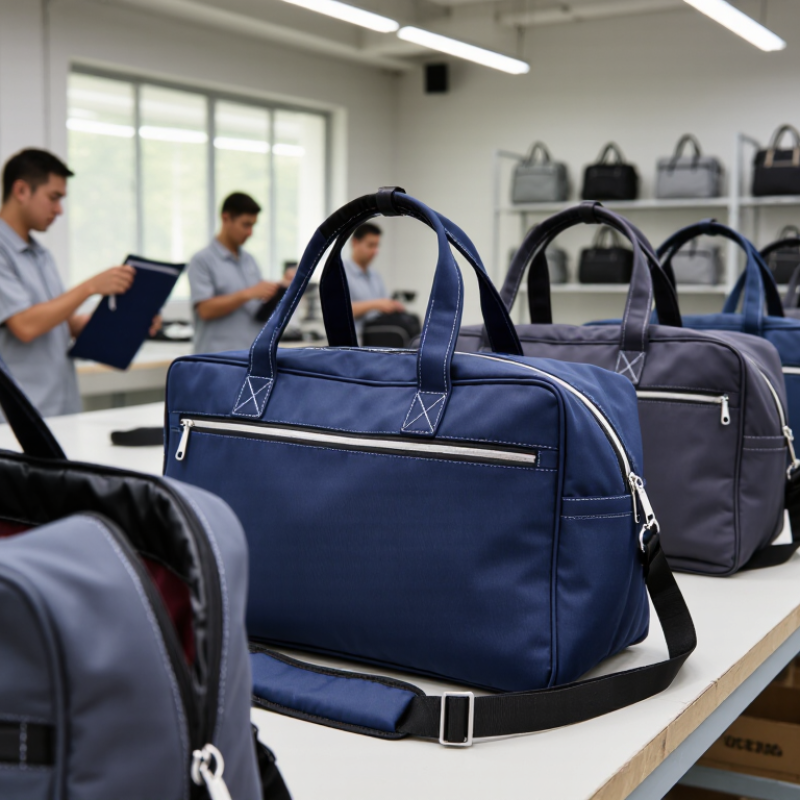
7 Tips for Choosing a Custom Sports Bags Manufacturer?

Define Your Custom Sports Bag Requirements and Budget

Before contacting a custom sports bags manufacturer, define the bag’s daily job. A football team may need ventilated shoe compartments, while runners may prefer lightweight hydration storage. Record dimensions, fabric, zipper type, logo placement, color codes, and carrying tests. Include photos or simple sketches. Small details prevent expensive revisions.

Your budget should cover more than the unit price. Add sampling, artwork, tooling, packaging, freight, inspection, and possible material waste. McKinsey and the World Federation of the Sporting Goods Industry projected the global sporting-goods market could reach about $522 billion by 2025. That growth increases customization demand, but it does not make every specification affordable. Ask for prices at several quantities. Compare landed cost, not just factory cost. Leave a contingency of 10–15 percent. I once underestimated sample revisions. It was avoidable.

Set a realistic target before requesting quotations. For example, specify 500 bags, a 35-liter capacity, recycled polyester, reinforced handles, and delivery by a fixed month. Request test evidence for seam strength, colorfastness, zipper performance, and fabric composition. ISO 3758 textile labeling guidance can help organize fiber information, although it is not a complete bag-safety standard. The International Trade Centre also emphasizes clear product specifications in international sourcing. Use a written checklist. Then ask the manufacturer which requirement is most likely to increase cost. Their answer can reveal practical experience, not just sales confidence.

Assess Manufacturer Experience, Materials, and Product Quality

7 Tips for Choosing a Custom Sports Bags Manufacturer

Tip 1: Check relevant experience. Ask for past sports bag samples, production years, and monthly capacity. An experienced factory should explain stitching, reinforcement, and zipper failure risks clearly.

Tip 2: Inspect materials carefully. Textile Exchange’s 2024 Materials Market Report states that global fiber production reached 124 million tonnes in 2023. It may reach 160 million tonnes by 2030. This growth increases material choices, but not necessarily material quality. Request fabric weight, coating details, recycled content records, and test certificates.

Tip 3: Review product quality through physical samples. Test shoulder straps, handles, seams, buckles, and wet-weather coatings. Pull the straps firmly. Open the zippers repeatedly. Small defects often appear after realistic use.

Tip 4: Require documented testing. Ask about colorfastness, abrasion resistance, load strength, and dimensional stability. Testing should match the bag’s intended activity and climate. A polished sample can still hide weak internal seams.

Tip 5: Study production control. Reliable manufacturers use incoming-material checks, in-line inspections, and final audits. Ask for defect-rate records and corrective-action reports.

Tip 6: Confirm capacity honestly. A factory may accept a large order, then subcontract important work without clear notice. That creates consistency problems. I have learned that low prices can look clever, until replacement costs arrive.

Tip 7: Assess communication and traceability. Your supplier should identify material sources, approval stages, and shipment checks. Textile data is useful, but supplier evidence matters more. Request dated records, not promises.

Review Customization Options, Design Support, and Prototyping

Choosing a custom sports bag manufacturer requires more than comparing prices.

Examine the available fabrics, lining, zippers, handles, pockets, and logo methods. Ask whether materials can withstand sweat, rain, rough locker rooms, and repeated washing. Small details matter. A reinforced shoe compartment can prevent odors from spreading, while padded straps improve comfort during long commutes. Request clear measurements and material specifications before approving the design.

Strong design support can prevent expensive mistakes.

The manufacturer should review your sketches, suggest practical construction changes, and explain how each feature affects cost. Ask for color samples, hardware options, stitching examples, and artwork placement guides. A useful designer will question weak ideas politely. That is valuable. Do not accept vague promises about durability or color accuracy. Written production notes create accountability and reduce misunderstandings.

Prototyping deserves serious attention.

Request a physical sample, not only a digital rendering. Fill it with shoes, towels, bottles, and protective equipment to test balance and capacity. Check zipper movement, seam tension, pocket access, and strap comfort. Photograph problem areas and request measured revisions. A first prototype may look impressive but still feel awkward when carried. That is normal, and sometimes revealing. Allow time for a second sample, especially when changing fabric thickness or internal structure. A manufacturer that documents revisions, testing results, and approval stages usually offers more reliable production control.

Verify Production Capacity, Certifications, and Quality Control

7 Tips for Choosing a Custom Sports Bags Manufacturer

Verify production capacity before discussing design details. A capable factory should explain its monthly output, equipment, workforce, and usual lead times.

Tip one: Request recent production photos and a live factory tour. Empty shelves prove very little.

Tip two: Ask whether the facility can handle your expected order during peak seasons. I once underestimated holiday delays, and the launch suffered.

Certifications should match the materials and markets involved.

Tip three: Check current certificates, issuing bodies, test dates, and covered product categories. Do not accept unclear scans.

Tip four: Request material test reports for fabric strength, colorfastness, zippers, and coatings.

Tip five: Ask how workers record inspection results. A reliable process uses written standards, sampling rules, and traceable batch numbers. Small details matter.

Quality control should continue from cutting to final packing.

Tip six: Confirm that inspectors check stitching density, strap reinforcement, dimensions, logos, and pocket alignment. Ask for the acceptable defect level.

Tip seven: Approve a pre-production sample before mass manufacturing. Keep one signed sample for comparison. Photographs help, but they cannot reveal a stiff zipper or uneven padding. Be willing to revise your checklist. Some weaknesses only appear after the first shipment.

Compare Pricing, Minimum Orders, Lead Times, and Customer Service

Choosing a custom sports bags manufacturer requires more than comparing the lowest unit price. Ask for a landed-cost breakdown covering fabric, printing, zippers, packaging, tooling, shipping, and payment fees. A cheap quote can hide expensive adjustments. I once compared only unit prices. That shortcut looked efficient. It was not.

Minimum order quantities need careful negotiation. Confirm whether the MOQ applies to each design, color, or total order. A factory may accept 500 bags overall, but require 500 pieces per color. Request a sample before signing. Measure pocket depth, strap strength, stitching, and logo placement. The 2024 MHI Annual Industry Report found that 55% of supply-chain leaders planned to increase investment in supply-chain innovation. This supports choosing manufacturers with reliable digital order tracking, not just attractive prices.

Lead times should separate sampling, material purchasing, production, inspection, and shipping. Ask for a written timeline with buffer days. Customer service matters when specifications change. Test response speed by sending detailed questions before ordering. Require a named contact, approval records, defect-resolution terms, and inspection photos. A 2023 global supply-chain survey reported that 72% of companies experienced significant disruptions during the previous year. That figure deserves attention. A manufacturer with clear backup plans may cost slightly more, but delayed team uniforms can cost more than the original savings. Do not assume fast replies guarantee strong production control. Check references, factory evidence, and past sample consistency.

FAQS

How can I judge a custom sports bag manufacturer’s experience?

Ask for past samples, production years, and monthly capacity. Check stitching, reinforcements, and zipper failure explanations. Practical details matter. A polished presentation proves little.

Which material details should I request?

Request fabric weight, coating information, recycled-content records, and test certificates. Compare samples under bright light and normal handling. More material choices do not guarantee better quality.

How should I test a physical sports bag sample?

Pull the shoulder straps firmly. Open each zipper repeatedly. Inspect seams, handles, buckles, pockets, and wet-weather coatings. Small faults often appear later.

What product testing documents should a manufacturer provide?

Ask for colorfastness, abrasion, load-strength, and dimensional-stability results. Testing should match the bag’s activity and climate. A neat exterior can hide weak internal seams.

How can I check production quality control?

Ask about incoming-material checks, in-line inspections, and final audits. Request defect-rate records and corrective-action reports. Dated evidence is stronger than reassurance.

How should I evaluate pricing and minimum order quantities?

Request a landed-cost breakdown covering fabric, printing, zippers, packaging, tooling, shipping, and payment fees. Confirm whether minimum quantities apply per design or color. Low prices can become expensive after adjustments. I once compared unit prices only. That shortcut failed me.

How should sampling and delivery timelines be organized?

Separate sampling, material purchasing, production, inspection, and shipping. Request written dates with buffer days. Check pocket depth, strap strength, stitching, and decoration placement before approval. Fast delivery is not always reliable.

What communication and traceability standards should I expect?

Require one named contact, approval records, inspection photos, and shipment checks. Ask for material-source information and backup plans. Test response quality with detailed questions. Quick replies alone prove little.

Conclusion

Choosing the right Custom Sports Bags Manufacturer requires more than comparing a few product photos or prices. Start by defining your bag types, sizes, materials, features, target users, and available budget. Then evaluate each manufacturer’s industry experience, material quality, workmanship, customization capabilities, design assistance, and willingness to create prototypes. A reliable partner should understand your requirements and help turn your ideas into practical, durable products.

Before making a decision, verify the manufacturer’s production capacity, relevant certifications, and quality control procedures. Compare minimum order quantities, pricing structures, sample costs, production lead times, shipping arrangements, and customer service responsiveness. Clear communication and transparent processes can prevent delays, inconsistent quality, and unexpected expenses. The best manufacturer is not always the cheapest option; it is the one that offers dependable quality, flexible customization, realistic delivery schedules, and professional support throughout the entire project.


Amelia

Amelia

Amelia is a dedicated marketing professional with a deep understanding of the company’s products, services, and customer-focused solutions. With a strong background in market research, content strategy, and professional communications, she transforms complex product information into clear,......