Choosing the right Hand Stitched Soccer Balls involves more than admiring neat seams and soft leather. A ball may feel premium in your hands yet perform poorly on wet grass. FIFA’s Laws of the Game specify that a size-five ball should weigh 410–450 grams and measure 68–70 centimeters in circumference. These figures create a useful starting point for serious buyers.
FIFA’s Quality Programme for Footballs also evaluates weight, circumference, roundness, rebound, water absorption, and pressure loss. Those tests matter because stitching affects durability, panel stability, and moisture resistance. A well-made hand-stitched ball should hold its shape after repeated impacts. It should also retain predictable flight near the penalty area. That is not always guaranteed by a higher price.
Small details reveal a lot.
Inspect the thread tension around each panel. Look for even spacing, firm knots, and no loose fibers near the valve. Press the surface with your thumb. Quality materials should compress slightly, then recover without leaving a deep mark. Professional equipment reports often separate match, training, and recreational products, but market comparisons can blur these categories. That makes labels surprisingly important. A “pro” description alone proves little.
The following seven tips connect recognized testing principles with practical buying experience. They also address common mistakes, including overvaluing appearance, ignoring certification, and choosing the wrong construction for weather conditions. No ball is perfect. Even excellent workmanship can fail when storage, inflation, or playing surfaces are neglected.
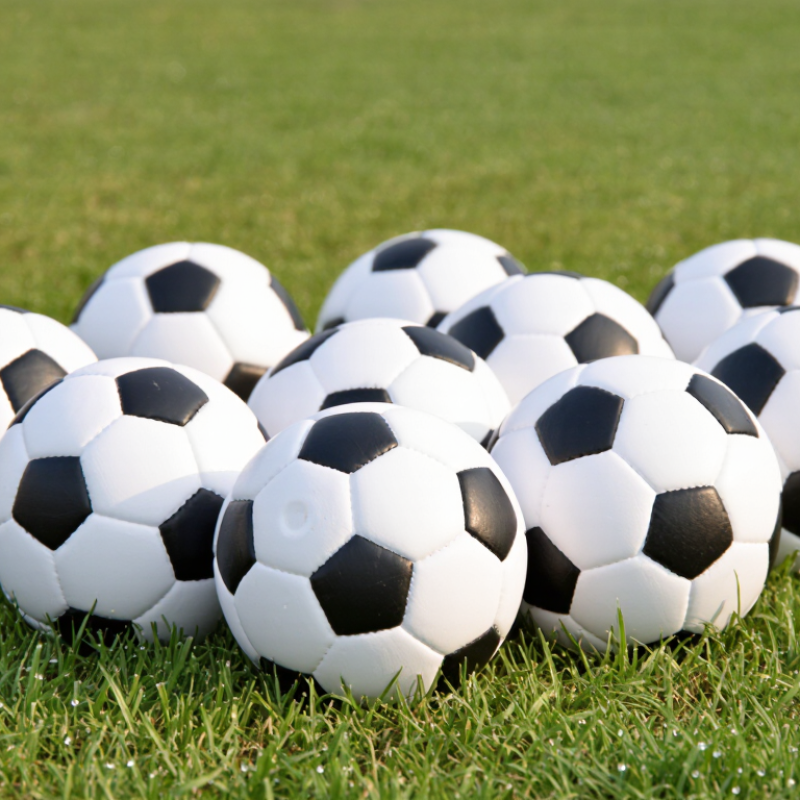
7 Tips for Buying Hand Stitched Soccer Balls
Define your playing needs before choosing a hand stitched soccer ball. A weekend player needs different performance from a youth coach or competitive athlete. Consider your surface, weather, training frequency, and preferred touch. Grass, artificial turf, and indoor courts can change how the ball feels underfoot. I once selected a soft ball for rough outdoor sessions. It felt excellent initially, but its cover wore faster than expected.
Size matters more than many buyers realize. FIFA’s 2024/25 Laws of the Game specify that a size 5 ball should measure 68–70 centimeters around and weigh 410–450 grams. This is the standard for most adult matches. A size 4 ball measures 63.5–66 centimeters and weighs 350–390 grams, making it more manageable for younger players. Check your league’s rules before purchasing. Age recommendations can differ slightly.
Hand stitching can provide a distinctive, softer feel and support careful panel construction. However, stitching alone does not guarantee durability. Inspect the seams closely. They should look even, tight, and free from loose threads. Press the surface with your thumb; excessive softness may reduce control during powerful passes. Match the bladder and air retention with your routine. FIFA Quality Programme testing includes measures such as circumference, weight, rebound, and pressure loss. These details offer useful evidence, not a perfect prediction. Personal touch still matters. Test the ball with short passes, a controlled trap, and one firm strike before buying.
| Tip | Playing Need | What to Check | Recommended Choice | Useful Specification |
|---|---|---|---|---|
| 1 | Define the player’s age and competition level | Age-group rules and local league requirements may determine the correct ball size. | Use the size required by the competition or training program. | Size 5 is commonly used for older youth and adult play; younger groups often use sizes 3 or 4. |
| 2 | Select the right ball size | Compare the ball’s circumference and weight with recognized soccer specifications. | Choose a smaller, lighter ball for younger players and a full-size ball for adult training or matches. | Size 3: 58.5–61 cm and 300–320 g; Size 4: 63.5–66 cm and 350–390 g; Size 5: 68–70 cm and 410–450 g. |
| 3 | Match the construction to your priorities | Inspect the stitching density, seam uniformity, panel alignment, and overall shape. | Choose clean, even hand stitching with no loose threads, open seams, or noticeably uneven panels. | Hand-stitched balls typically use individually sewn panels; quality depends on consistent thread tension and finishing. |
| 4 | Choose the appropriate playing surface | Outdoor grass, artificial turf, hard ground, and indoor courts create different levels of abrasion. | Select a cover and bladder designed for the surface where the ball will be used most often. | For abrasive surfaces, prioritize a durable synthetic cover and reinforced seams; avoid using an indoor-specific ball outdoors. |
| 5 | Decide between soft touch and durability | Cover material affects touch, water resistance, abrasion resistance, and maintenance needs. | Use a softer polyurethane cover for controlled touch or a more abrasion-resistant synthetic cover for frequent training. | Polyurethane is commonly chosen for a softer feel; PVC-based covers are generally more abrasion-resistant and economical. |
| 6 | Check the bladder and air retention | A ball should retain air well and return to a consistent shape after inflation. | Look for a reliable valve, a centered bladder, and a round shape without flat areas or excessive deformation. | Latex bladders generally provide a softer response but may require more frequent inflation; butyl bladders usually retain air longer. |
| 7 | Verify inflation, certification, and care requirements | Check the printed inflation range, applicable match approval, cleaning instructions, and storage guidance. | Buy a ball that meets the required playing standard and inflate it within the manufacturer’s stated range. | For a standard size 5 match ball, the commonly specified pressure range is 0.6–1.1 bar (8.7–16.0 psi); keep the ball clean, dry, and away from prolonged heat. |
Match the ball to your age, surface, weather, and playing frequency. Grass, artificial turf, and indoor courts create different touches. A weekend player may prefer comfort over maximum match performance.
Size 5 usually suits adult matches. It measures about 68–70 centimeters and weighs 410–450 grams. Size 4 is smaller and lighter for many younger players. Check local league rules.
No. Hand stitching can create a soft touch and careful panel construction. Inspect every seam for tight, even stitches. Loose threads may spread after repeated impacts.
Examine the ball under bright light. Run one finger across each seam. It should feel firm and evenly joined. Raised seams deserve caution.
Textured polyurethane can provide controlled grip and weather resistance. Softer covers may feel pleasant, but they can wear sooner. Press the surface gently. It should recover without a deep mark.
Place it on a flat surface and rotate it slowly. Watch for wobbling, uneven panels, or an irregular bounce. This is useful, but not a laboratory test.
Try short passes, one controlled trap, and one firm strike. Notice the touch, rebound, and control. A ball may feel wonderful at first. That impression can be wrong.
Look for a verifiable address, clear contact details, and a written return policy. Request photos of the valve, seams, label, and packaging. Confirm warranty coverage, claim steps, and return shipping costs. Keep the invoice and photographs. A long warranty means little without a workable claims process.
Choosing the right Hand Stitched Soccer Balls starts with understanding your playing needs, including your age group, skill level, field type, and preferred ball size. Carefully examine the stitching for even, secure seams, while also checking the number of panels and the quality of the outer material. A well-constructed ball should have a balanced shape, suitable weight, reliable air retention, and a consistent surface that supports accurate control and passing.
It is also important to compare the ball’s match standards with your expected playing conditions, such as training, casual games, or competitive use. Consider durability, weather resistance, and how frequently the ball will be used. Before purchasing, verify the seller’s reliability, confirm product authenticity, compare prices fairly, and review the available warranty or return coverage. These steps can help you select a dependable ball that offers lasting performance and good value.