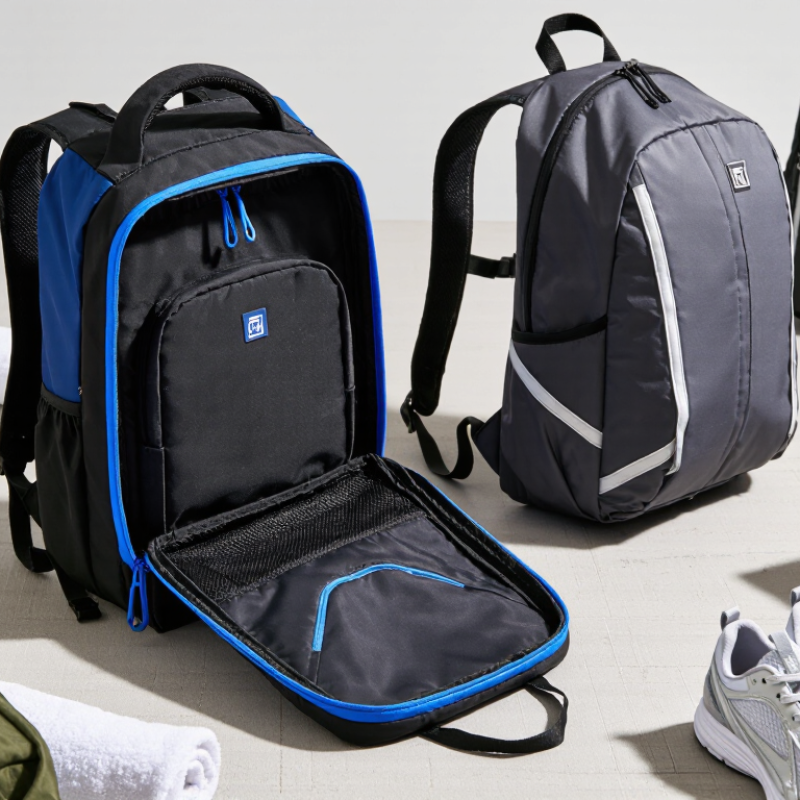
| Bag Structure and Function |
A supplier should convert sketches, measurements, or technical drawings into a functional sample suitable for sports, school, travel, or team use. |
Main compartment layout, shoe compartment, wet pocket, laptop sleeve, bottle holder, helmet storage, ball compartment, and ventilation panels. |
A first prototype commonly requires several rounds of fitting and functional review before bulk production. |
Can the factory provide a pattern, 2D specification sheet, and 3D or physical prototype? |
| Fabric Selection |
Material recommendations should match abrasion, weight, water resistance, flexibility, and intended retail price requirements. |
Polyester, recycled polyester, nylon, canvas, mesh, coated fabric, ripstop construction, and different lining materials. |
Common sports-bag fabrics include 300D–600D polyester or nylon; heavier fabrics generally improve durability but increase weight and cost. |
What are the fabric composition, weight, coating, colorfastness, and abrasion-test results? |
| Size and Capacity |
The supplier should confirm finished dimensions, usable capacity, load distribution, and whether the bag meets airline, school, or team requirements. |
Custom height, width, depth, expansion panels, compression straps, and compartment proportions. |
Typical sports backpacks range from approximately 15–35 liters, depending on equipment and target user group. |
Are dimensions measured empty or fully loaded, and what is the recommended maximum carrying weight? |
| Logo and Artwork Application |
Multiple decoration methods should be available, with artwork approval before production. |
Screen printing, embroidery, woven labels, heat transfer, rubber patches, reflective prints, and silicone badges. |
The method depends on fabric texture, artwork detail, color count, order quantity, and required wash or abrasion resistance. |
Will you provide a digital proof and a physical logo sample for approval? |
| Ergonomic Design |
A quality manufacturer should address comfort, ventilation, adjustability, and load support rather than focusing only on appearance. |
Padded shoulder straps, sternum strap, breathable back panel, waist belt, reinforced grab handle, and adjustable strap length. |
High-load designs commonly use multiple layers of foam and reinforced stitching at strap attachment points. |
How are strap seams, stress points, foam thickness, and load-bearing areas tested? |
| Water Resistance |
The supplier should distinguish between water-repellent fabric, water-resistant construction, and a genuinely waterproof design. |
PU or TPU coating, water-repellent treatment, storm flaps, coated zippers, rain cover, and sealed or bound seams. |
Water resistance depends on fabric coating, zipper design, seam construction, and laboratory or in-house test conditions. |
What test method, water pressure, exposure time, and acceptance standard will be used? |
| Minimum Order Quantity |
MOQ should be quoted separately for stock materials, custom colors, custom hardware, and fully customized construction. |
Custom fabric color, zipper color, webbing color, labels, packaging, and unique molds or accessories. |
Small custom orders may start around 100–300 pieces, while complex designs or special materials often require higher quantities. |
Is the MOQ calculated per style, color, size, or total order quantity? |
| Sampling and Development |
The development process should include specification confirmation, prototype review, corrections, and a pre-production sample. |
Size adjustments, pocket revisions, material changes, hardware changes, color matching, and logo placement. |
A basic sample often takes about 7–15 working days after specifications and materials are confirmed; complex development may take longer. |
Are sample fees, revision costs, and sample shipping charges refundable or credited against bulk production? |
| Bulk Production Lead Time |
The quotation should show separate timelines for material sourcing, cutting, sewing, decoration, inspection, and packing. |
Expedited material purchasing, split delivery, scheduled production, and pre-booked capacity. |
After approval of the pre-production sample, standard production commonly takes about 25–45 working days, depending on quantity and complexity. |
What events start the lead-time clock, and how are delays caused by materials or inspections handled? |
| Quality Control |
Quality control should cover incoming materials, in-line sewing, finished goods, dimensions, appearance, and packaging. |
Approved reference sample, inspection checklist, defect classification, carton inspection, and third-party inspection support. |
Common checks include seam strength, zipper operation, color consistency, logo position, dimensions, odor, and loose-thread control. |
Can you provide inspection records, defect limits, corrective-action reports, and pre-shipment photographs? |
| Testing and Compliance |
The manufacturer should identify the testing and labeling requirements of the destination market before production. |
Material testing, colorfastness, restricted-substance testing, labeling, packaging marks, and social-compliance documentation. |
Requirements vary by market and product use; tests should be performed by an appropriate qualified laboratory when required. |
Which standards apply to my destination country, and are test reports current for the exact materials used? |
| Packaging and Private Labeling |
Packaging should protect the bags during transport and support retail presentation without creating unnecessary waste. |
Hangtags, care labels, barcode stickers, tissue paper, polybags, recycled packaging, custom cartons, and carton markings. |
Packaging specifications should include bag folding method, units per carton, carton dimensions, gross weight, and shipping marks. |
Can the packaging be optimized for pallet loading, container utilization, and destination labeling rules? |
| Shipping and Export Support |
A capable supplier should provide carton data, commercial documents, and practical shipping options. |
Ex-works, FOB, CIF, DDP coordination, air freight, sea freight, courier samples, and split shipments. |
Sea freight is generally more economical for larger orders, while air or courier shipping is faster for samples and urgent replenishment. |
Which trade terms are offered, and who is responsible for export clearance, duties, insurance, and final delivery? |
| Cost Transparency |
The quotation should separate product cost, development charges, tooling, testing, packaging, and transportation. |
Different material grades, hardware options, logo methods, order quantities, packaging levels, and shipping terms. |
Unit cost normally decreases with higher quantities, simpler construction, shared materials, and fewer decoration processes. |
Which costs are one-time charges, which are recurring, and what changes could affect the final unit price? |